The skin on the skeletons has looked much like it does on most of today's Danes. Genetic studies have shown that even back then there was a healthy mix of blonds, redheads and dark-haired people, just like today.
How tall was the average Viking?
"The examination of skeletons from different localities in Scandinavia reveals that the average height of the Vikings was a little less than that of today: men were about 5 ft 7-3/4 in. tall and women 5 ft 2-1/2 in.What Colour eyes did Vikings have?
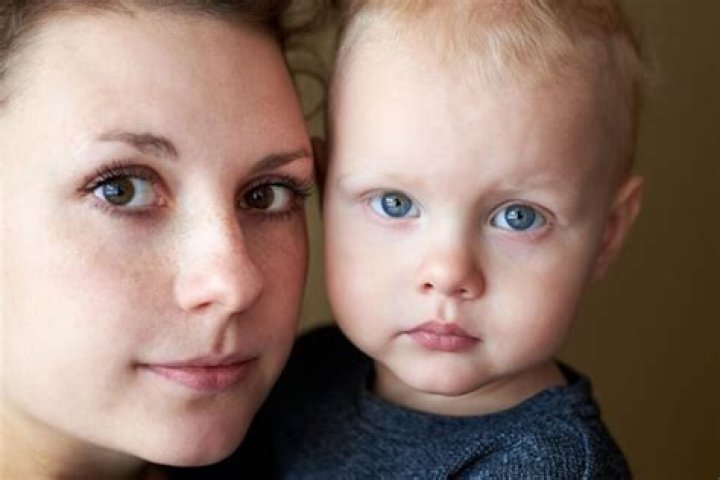
The Vikings had various eye colors, although the predominant eye color was blue or gray. However, Irish Vikings had predominantly brown or hazel eyes, and some Viking settlements were much more diverse than others.What are typical Viking features?
Vikings were often described and depicted with well-groomed and sometimes elaborate facial hair, ranging from full and long beards to more practical Viking-style mutton chops and mustaches. Historians believe that most Norse men had facial hair, and those who didn't were even mocked for it according to the sagas.What Colour skin did Vikings have?
A small number of Vikings had black—or brown—skin, according to reliable historical evidence. For centuries, dark-skinned people either willingly traveled to Scandinavia or were forcibly taken there as slaves. Over time, some assimilated with the Vikings through farming, marriage, combat, and other cultural factors.What did the Vikings look like in the Viking age?
Why were Vikings so muscular?
The Viking trained their what Shaul calls their “tactical or combat chassis”—legs, hips, and core—daily. They did this by farming (lifting heavy stuff), shipbuilding (chopping trees), and rowing (strengthening legs, arms, and lungs).How common is Viking DNA?
The genetic legacy of the Viking Age lives on today with six per cent of people of the UK population predicted to have Viking DNA in their genes compared to 10 per cent in Sweden. Professor Willeslev concluded: "The results change the perception of who a Viking actually was.What is a Viking face?
The faces of men and women in the Viking Age were more alike than they are today. The women's faces were more masculine than women's today, with prominent brow ridges. On the other hand, the Viking man's appearance was more feminine than that of men today, with a less prominent jaw and brow ridges.Who was the tallest Viking?
Thorkell the Tall, a renowned chieftain and warrior, was the tallest Scandinavian Viking. Modern-day Englishmen are around 3-4 in (8-10 cm) taller than medieval Scandinavians.How do you know if you are a Viking?
And experts say surnames can give you an indication of a possible Viking heritage in your family, with anything ending in 'son' or 'sen' likely to be a sign. Other surnames which could signal a Viking family history include 'Roger/s' and 'Rogerson' and 'Rendall'.Who was the first blue eyed human?
A Stone Age man who lived about 7,000 years ago and whose buried bones were discovered in 2006 has turned out to be the earliest known person with blue eyes, a physical trait that evolved relatively recently in human history, a study has found.Why did Vikings have long hair?
In Viking society, women wore their hair long as a sign of status and to be appreciated for its beauty. Naturally, these hard-working women tied their hair back, braided it, or wore it up to keep it out of their way while they worked the loom or performed their other daily tasks.Do I have Viking DNA?
While it's not possible to find out for certain if you are descended from the people known as the Vikings, you can take a DNA test to determine if you have Scandinavian ancestry. I recommend testing with Ancestry DNA or 23andMe for the most accurate ethnicity or ancestry results.Do Vikings still exist?
No, to the extent that there are no longer routine groups of people who set sail to explore, trade, pillage, and plunder. However, the people who did those things long ago have descendants today who live all over Scandinavia and Europe.Why are Vikings so strong?
Vikings were armed to the teethArchaeological findings show that the Vikings had everything required of a terrible foe. Their axes, swords, spears, bows and arrows, shields, and armour were equal to the weapons and armours of continental Europe and Britain – and often of the highest quality available at the time.